
Blisters
Blisters
Blisters
are essentially a burn. They occur where friction has built up between
the inside of your boots and the skin on your feet. The body reacts in
the usual way for a burn. It produces plasma and makes a section of
the skin swell and fill with fluid (plasma) in an attempt to cool the
area. Blisters can be very very painful as some of you found out on the
practice walk.
 |
| Stage 1: Reddening of the skin. Early signs of a blister. The red area would feel hot. |
You
should never burst a blister unless you have sterile equipment, know
how to do it properly, and have the materials to keep the area clean
afterwards. The best thing is to avoid getting blisters. Prevention is
certainly better than the cure.
The good news is that blisters can be avoided by following these simple tips:
- Instead of wearing one pair of thick socks, wear one pair of medium weight woollen socks with a thinner pair underneath. This can distribute any friction between the two pairs of socks and not to the feet.
- Make sure you keep your feet dry. If they get wet, stop and take a few minutes to sort your feet out. Give them a dusting of foot powder and put on dry socks.
- Stop and treat any "hot spots" the moment you begin to notice them. Make sure your socks are pulled up properly.
- Do not wear those stupid trendy ankle socks. They are a sure way of getting blisters.
- Make sure your boots fit properly. Do the laces up reasonably tight so that the boots don't move about on your feet.
- Put a small amount of Vaseline on the parts of your feet which you normally get blisters on.
- Make sure you wear proper woollen hiking socks. Sports socks tend to give people blisters.
 |
| Stage 2: The "hot spot" develops into a full blown blister. The area swells and fluid builds up under the skin. |
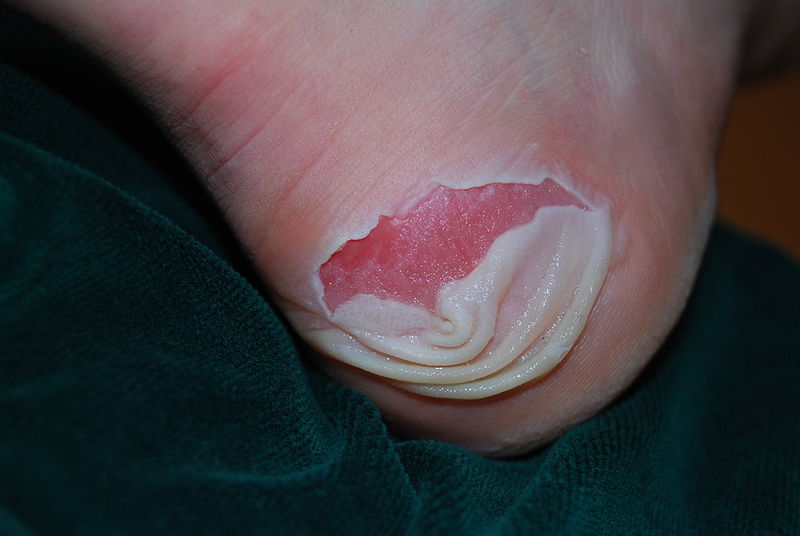 |
| Stage 3: The blister has burst tearing the skin and exposing raw skin. This will be very sore indeed. |
The best way to treaty a blister is to let the air get to it so it dries out. Only in extreme circumstances should you consider bursting it with a pin. If this is unavoidable, cleanse a needle or a pin first by holding for a few seconds in a flame. Clean the area of the blister with an alcohol wipe (you should have a few of these in your first aid kit). Have a blister dressing ready. Using the pin/needle,make a small hole in the bottom of the blister and another small hole at the top of the blister. Using your clean hand, apply a small amount of pressure in a downwards motion to squeeze the fluid out of the blister. Once you think you have squeezed most of the fluid out of the blister, wipe the area clean again. Allow the area to dry for a few minutes. Now dress the area to keep it padded and clean. Check you blister again when you make camp and try to sleep with the blister exposed to air.

No comments:
Post a Comment